
Start with your usual trip
A daily commute and a week away ask different things of motorcycle luggage. Before comparing bag sizes, list what you actually carry. Separate the items you need during a ride from the items you only need when you stop for the night. That simple distinction helps determine both capacity and placement.
Think about the return trip too. A system that just holds your departure load may leave little room for supplies picked up along the way. At the same time, extra space can encourage unnecessary packing. Choose around a realistic load rather than buying the largest luggage that appears to fit.
Record whether you carry a passenger and whether you need to remove the luggage frequently. Access to the seat, fuel cap and everyday service points also matters. A setup that works for an occasional trip may become frustrating if it adds several steps to every stop on your regular route.
Compare complete systems
Look at the bag, its mounting hardware and the motorcycle as one system. A case may need a specific rack and adapter plate. A soft bag may require supports, straps or other hardware specified by its manufacturer. The price of the bag alone does not establish the cost or completeness of the installation.
Check the exact year and model application for every mounting component. Where a seller offers several plates or racks under a similar name, compare the part numbers with the manufacturer’s fitment information. Do not assume that two products from the same brand share a mounting interface.
Make a list of the components included in the package and a second list of the components required by its instructions. This also helps when comparing an existing rack with a new luggage purchase. Compatibility is a documented relationship between parts, not something established by a similar shape in a photograph.
Choose the format around access
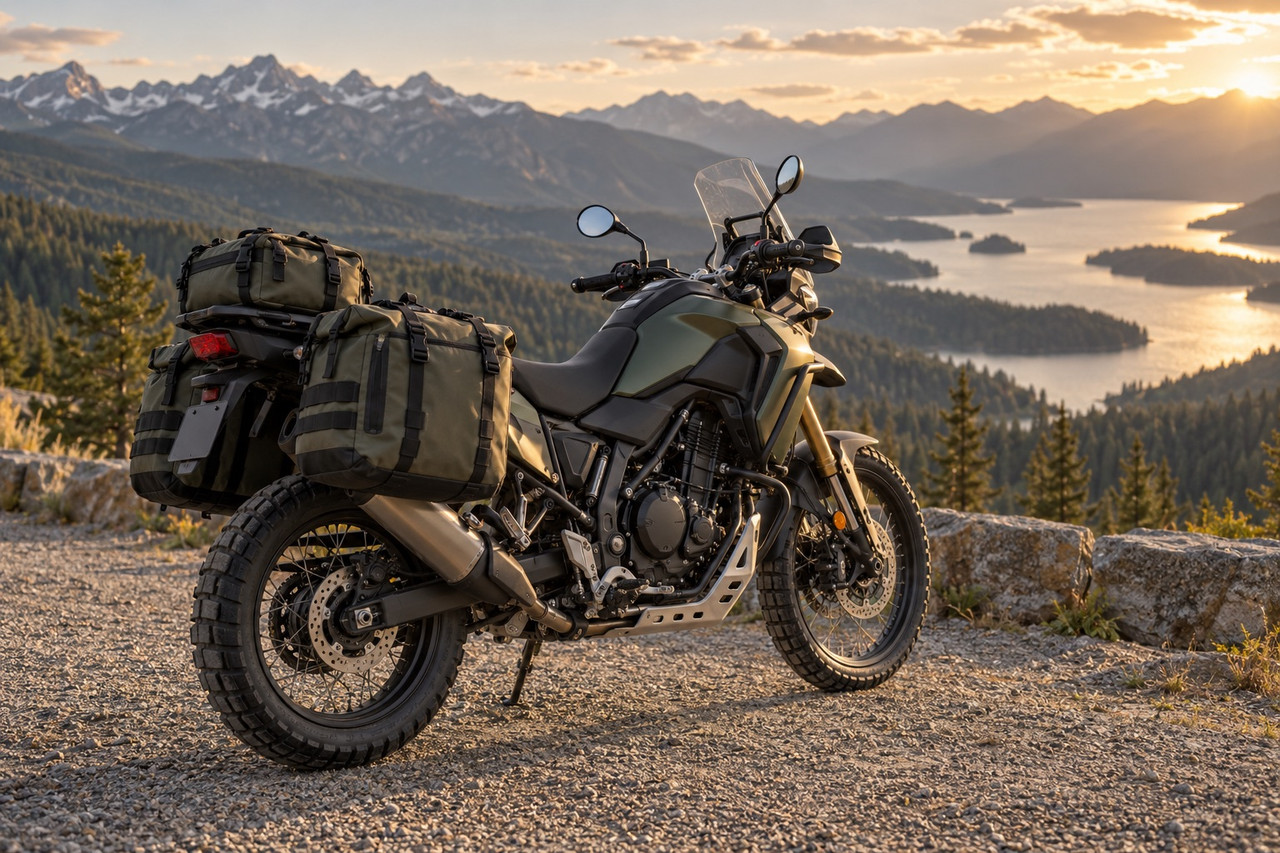
Side luggage can divide a larger load between two bags or cases. A top case can provide a single compartment accessed from above. A tail bag uses space around the rear seat or luggage platform, while a tank bag keeps selected small items near the rider. Each format changes where you reach and what must be removed to reach it.
Hard and soft luggage also differ in structure, closure and how they are carried off the bike. Compare the actual product features rather than assuming every hard case is secure or every soft bag is waterproof. Look for a clear description of locks, closures, weather protection and any liner or cover required.
Try a packing list against the usable compartment dimensions. A quoted capacity does not tell you whether a particular laptop, helmet or awkward item will fit through the opening. Internal dividers and shaped walls may be useful, but they can also change how you use the space.
Account for the motorcycle’s limits
Read the motorcycle, rack and luggage instructions together. Each may specify a load limit or an operating restriction. The relevant limit is not automatically the largest number you find. Include the luggage and mounting hardware themselves wherever the documentation requires them to count toward the permitted load.
Avoid turning a general luggage recommendation into a universal payload figure. The correct allowance depends on the motorcycle and the installed system, including the rider, passenger and other carried equipment. Use the vehicle’s manual to determine how its limits apply to your setup.
Plan for clearance as well as weight. Follow the mounting instructions for keeping luggage and straps away from hot or moving parts. RevZilla’s luggage overview explains why some soft saddlebags need supports to keep them clear of tires and suspension. The particular supports and clearances still need to come from the instructions for your equipment.
Make everyday use part of the decision
Picture a typical stop with the bike loaded. Can you get the item you need without unpacking everything? Can you remove the bag using the intended release or attachment system? Where will the straps, keys or removable liners go when the luggage is off the motorcycle?
Consider whether you want the system to stay installed between trips. A removable case may still leave its mounting rack in place. Check how that arrangement interacts with passenger use and any accessories you already own. This is easier to assess before ordering than after you have fitted the first component.
Before riding with a new setup, complete the checks required by the luggage and motorcycle manufacturers. Keep the instructions and part numbers with your service records. Recheck the attachment system at the intervals those instructions specify, and investigate any movement or interference rather than compensating with improvised attachments.
The useful choice is the system that fits your motorcycle, carries your real load and works at the stops you actually make. Capacity is one part of that decision; fitment, mounting and access make it usable.
Planning more than luggage? Read our accessory planning checklist for the questions to ask before building a complete setup.